
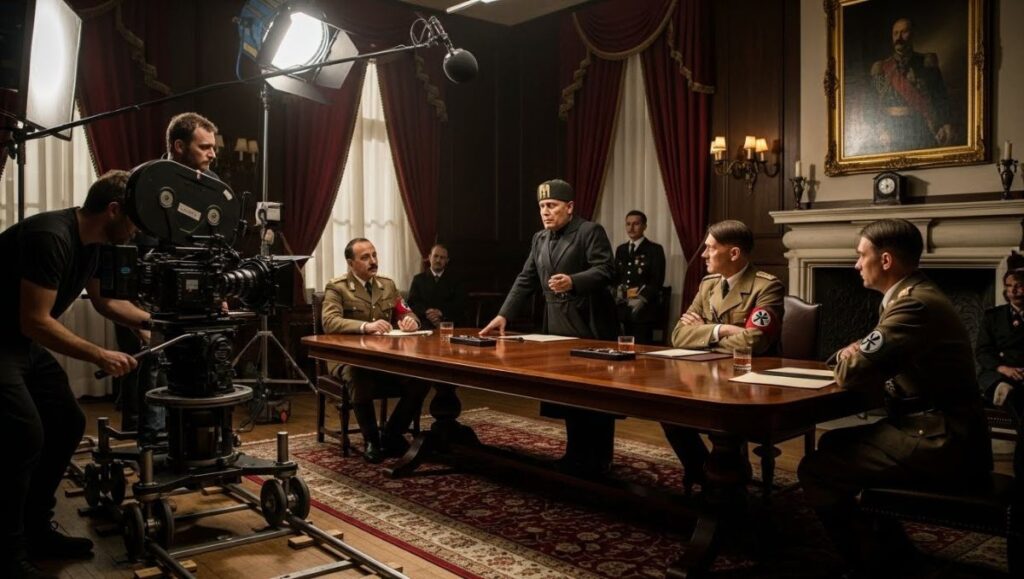
Fascisterne, a term that evokes powerful images and emotions, represents a dark chapter in human history. Fascism emerged as a political ideology in the early 20th century, rooted in nationalism, authoritarianism, and anti-communism. Its origins are intertwined with the tumultuous socio-political landscape of post-World War I Europe. As nations struggled to rebuild and redefine themselves, charismatic leaders seized the moment to promote their radical ideas.
This exploration delves into the key figures behind fascism—individuals who not only shaped its tenets but also left an indelible mark on world history. From Benito Mussolini’s rise in Italy to Adolf Hitler’s chilling regime in Germany, each leader brought forth unique contributions that would forever alter societies. Their ideologies fueled movements across borders and set off waves of conflict that resonate even today.
Join us as we unpack these influential personalities and their complex legacies within the framework of fasciste ideals.
Key Figures of Fascism and Their Contributions
Fascisterne has been shaped by several key figures, each leaving a distinct mark on its ideology. These leaders influenced political landscapes and inspired movements across Europe.
Benito Mussolini is often recognized as the pioneer of fascist thought. His aggressive nationalism set the stage for others to follow. He crafted the Italian state into a symbol of strength and unity.
Adolf Hitler took these ideas further, infusing them with extreme racism and anti-Semitism. His totalitarian regime in Germany became synonymous with dictatorship, leading to disastrous consequences during World War II.
Francisco Franco’s rule in Spain highlighted another facet of fascism—nationalist sentiment combined with authoritarian control. His influence endured even after his death, shaping Spanish politics for decades.
British figure Oswald Mosley sought to import fascism into Britain through the British Union of Fascists. Though less successful than his contemporaries, he sparked discussions about national identity that resonate today.
Benito Mussolini: The Father of Italian Fascism
Benito Mussolini emerged as one of the most notable figures in European history. His rise to power marked the dawn of Italian Fascism, a movement that would influence political ideologies worldwide.
Mussolini’s charismatic leadership and fiery speeches captivated many Italians weary from World War I’s aftermath. He promised stability and national pride during a time of economic turmoil and societal unrest.
In 1922, he orchestrated a march on Rome, effectively seizing control of Italy. Once in power, he established an authoritarian regime characterized by strict censorship, propaganda, and aggressive nationalism.
Under his rule, fascist principles permeated every aspect of life. Education was molded to foster loyalty to the state while dissent faced harsh consequences. Mussolini’s vision reshaped Italy but ultimately led it into devastating conflicts during World War II.
Adolf Hitler: The Rise and Fall of the Nazi Regime
Adolf Hitler’s ascent to power marked a pivotal moment in history. With his charismatic oratory, he united a fractured Germany under the banner of National Socialism. Economic turmoil and societal unrest created fertile ground for his radical ideas.
The Nazi regime’s propaganda machine painted Jews and other minorities as scapegoats for Germany’s woes. This fueled deep-seated hatred and led to horrific consequences during the Holocaust.
Hitler’s ambitions extended far beyond German borders, igniting World War II with aggressive expansionist policies. His early military successes were overshadowed by monumental defeats, notably at Stalingrad.
As Allied forces closed in, Hitler’s grip on reality diminished. He retreated into a bunker while chaos unfolded above him. The fall of Berlin symbolized not just his demise but also the catastrophic end of an ideology that had caused immense suffering across Europe.
Francisco Franco: Spanish Dictator and Promoter of Nationalist Ideals
Francisco Franco emerged as a pivotal figure in Spanish history, leading the country during its tumultuous mid-20th century. He rose to power after the Spanish Civil War, which left deep scars on the nation.
Franco’s regime was marked by staunch nationalism and authoritarianism. His vision aimed to create a unified Spain under his control, suppressing regional identities and cultures. The Basques and Catalans faced significant repression as he sought to instill a singular national identity.
Economically, his policies initially favored autarky but later shifted towards liberalization in the 1950s. These changes spurred growth yet failed to alleviate social tensions completely.
Internationally, Franco aligned with fascist powers during World War II but maintained neutrality. His rule lasted until 1975, leaving behind a complex legacy that continues to provoke debate and reflection within Spain today.
Oswald Mosley: The British Union of Fascists and Their Influence on Europe
Oswald Mosley emerged as a controversial figure in British politics during the 1930s. He founded the British Union of Fascists (BUF) in 1932, inspired by European fascist movements.
His organization attracted attention with its striking uniforms and rallies. The BUF aimed to promote nationalism and combat what Mosley viewed as the threats posed by communism and Jewish influence in society.
Despite his fervent speeches, Mosley’s party struggled to gain widespread support. Public opposition grew, particularly after violent clashes between BUF members and anti-fascist groups became commonplace.
However, his ideology left a lasting mark on British political discourse. Even today, discussions around nationalism often echo themes promoted by Mosley’s faction throughout Europe’s turbulent history. His legacy remains complex—an emblem of divisive beliefs that continue to spark debate among historians and political theorists alike.
Conclusion
Fascisterne, with its roots steeped in early 20th-century socio-political turmoil, continues to influence discussions today. The figures highlighted—Mussolini, Hitler, Franco, and Mosley—each played pivotal roles in shaping the ideology of Fascisterne across Europe.
Their respective contributions tell stories of ambition intertwined with authoritarianism. Mussolini’s quest for a unified Italian identity laid the groundwork for future fascist regimes. Hitler’s Nazi Germany exemplified both the heights of power and the depths of human cruelty. Franco’s Spain showcased how nationalism could intertwine with fascist principles under unique circumstances. Meanwhile, Mosley’s efforts demonstrated that Fascisterne sentiments were not confined to continental Europe but found expression even on British soil.
Understanding these individuals allows us to grasp how their ideologies can resonate through time and manifest in various forms today. Examining their legacies sheds light on contemporary political dynamics that echo past tensions.
As we navigate our current landscape marked by polarization and division, reflecting on these historical narratives becomes crucial. It challenges us to confront ideologies like Fascisterne while fostering dialogue about democracy, freedom, and collective responsibility going forward.